
We’ll start with a quiz: 1920s OR 1990s+?
Are the following song lyrics from the 1920s or 1990s onwards? Make your guesses then scroll down for the answers.
I took her by her golden curls
And I dragged her down to the riverside
And as I threw her in to drown
I watched her as she floated down
Song A Answer:
1927, Banks of the Ohio, Red Patterson’s Piedmont Log Rollers
Boom boom, boom boom, with the 44
When I spied Billy de Lyon
he was lyin’ down on the floor
Song B Answer:
1923, Stack O’Lee Blues, Mississippi John Hurt
I keep a loaded 44 sittin’ by the bed
For the jeepers and the creepers who ain’t right in the head
Hope I never have to use it, but you never know these days
I’m a little crazy, but the world’s insane
Song C Answer:
2025, I’m a Little Crazy, Morgan Wallen
Pretty Polly, Pretty Polly you guessin’ about right
I dug on your grave two-thirds of last night
Song D Answer:
1927, Pretty Polly, Dock Boggs
Twinkle twinkle ‘lectric star
Yonder goes Brady on a ‘lectric car
Makin’ his way to the freedom line
He’s gonna kill him a sucker, like a bulldog man
Song E Answer:
1929, Been on the Job Too Long, Wilmer Watts & his Lonely Eagles
When he pawned my things I said: you’re a dirty old thief
Now, then he turned around and knocks out both of my teeth
Song F Answer:
1923, Outside of That, Bessie Smith
He slapped my face, and he shook me like a rag doll
Don’t that sound like a real man?
I’m going to show him what little girls are made of
Gunpowder and lead
Song G Answer:
2007, Gunpowder & Lead, Miranda Lambert
Nobody knows why he took a 44
And unloaded on the whole front row, Buck! Buck!
Try to tell him, but he act like he don’t know me
Pull out his pistol and he show me
Song H Answer:
2001, Lil’ Homies, 2 Pac
Rooty toot toot
Three times she shot right through that hardwood door
Shot her man, he was doing her wrong
Song I Answer:
1927, Frankie and Johnny, Jimmie Rodgers
Went out one night to take a little round
I met little Sadie and I blowed her down
I run right home and I went to bed
44 smokeless under my head
Song J Answer:
1929, Little Sadie, Clarence Ashley
And Mama said she wants to show you how far she can float
And don’t worry about that little boo-boo on her throat
Song K Answer:
1999, 97 Bonnie and Clyde, Eminem
She leaned herself against a fence
Just for a kiss or two
With a little pen-knife held in her hand
She plugged him through and through
Song L Answer:
1929, Henry Lee, Dick Justice
“It’s time to fight back,” that’s what Huey said
Two shots in the dark, now Huey’s dead
Song M Answer:
1998, Changes, 2 Pac
You must have heard about The Curse Of Millhaven
How last Christmas Bill Blake’s little boy didn’t come home
They found him next week in One Mile Creek
His head bashed in and his pockets full of stones
Song N Answer:
1996, The Curse of Millhaven, Nick Cave & the Bad Seeds
Kenny lookin’ high, Kenny lookin’ low
Shot poor Delia with that hatin’ 44
She’s all I’ve got, is gone
Song O Answer:
1928, Delia, Blind Willie McTell
Warning: Spoilers ahead for the quiz on the previous page.
Depending on which way you lean, it’s either shocking what they get away with these days, or it was far worse back then and everyone’s gone soft now. In the case of popular music, it’s both.
The songs we selected for our quiz are all murder themed, though they could have easily been all sex or drugs. The 1920s songs are all early recordings of traditional/folk songs in the murder ballad genre. Though these days we mostly associate the genre with the American Old West, it traces back to England and Scotland, and broadsides – the one-sheet tabloid newspapers of the 16th century. The lurid true crime podcasts of their day.
Song D in our quiz is Pretty Polly, a version of an English broadside ballad from the 1760s. As The Gosport Tragedy, it tells the story of a young woman who is lured to the forest and murdered by her boyfriend after he discovers she’s pregnant. It is typical of the ‘murdered woman’ type of ballad, of which there’s several in our quiz. These tales were reflective of the prevalence of violence against women, but also a warning to women of what could happen if they got mixed up with the wrong type, reminding them of how to behave (a similar behavioural warning, ‘a talk with the girls’, is mentioned in our fans feature).
Maybe you were tricked by the mention of the electric car, but song E in our quiz was Been on the Job Too Long (aka Duncan and Brady), first recorded in 1929. It too was pretty standard murder ballad fare, with a terrible crime followed by the punishment/moral. It was based on the real life shooting of a policeman in Missouri in 1890. A more popular recording was made in 1947 by Lead Belly – himself a morally questionable character.
Huddie ‘Lead Belly’ Ledbetter was an African American folk and blues singer who found success after securing a pardon seven years into a thirty-year prison sentence for murder, his singing winning him the approval of the Governor. This was the second of four prison sentences he’d serve for violent crime. Of Ledbetter, Life magazine (19th April 1937) said, “amuse the public, and you can get away with almost any crime.” They placed a large close-up photograph of his hands on his guitar captioned, “these hands once killed a man”. Of course, Ledbetter’s convictions, career and legacy all take place within the context of the Jim Crow system and he likely would have appealed to black and white audiences for very different reasons. To one group a hero, and to the other, a titillating stereotype.
On the opposite end of the notoriety scale were actors like Fatty Arbuckle and Mabel Normand, whose careers both tanked despite never being found guilty of any crimes. Like now, there are those whose careers will thrive on being a bad boy, and those whose careers will be tarnished.
Song B in our quiz was Stack O’Lee Blues, aka Stagger Lee. This song tells the tale of another Missouri crime in which ‘Stagger’ Lee Shelton (a pimp), gets into an altercation in a bar with an acquaintance named Billy Lyon over the removal/theft of his hat. He kills Lyon, retrieves his hat and is later convicted of murder. This 1923 version ends with a depiction of his execution (though in real life, he went to prison and was later paroled), “at twelve o’clock they killed him, they’s all glad to see him die. That bad man, oh, cruel Stack O’ Lee.”
What makes Stagger Lee so interesting is its constant evolution through its many re-recordings, from then to present day. Everyone from Fats Domino to Neil Diamond has recorded a version. The changes and historical context have been researched in great detail by Paul Slade on his website www.planetslade.com (along with the other most popular murder ballads) and is well worth checking out if you’re interested.
1958 saw an upbeat R&B recording by Lloyd Price reach number 1 in the US chart and number 7 in the UK. In this (and other versions) Lee is an anti-hero of sorts. The murder is revenge for being cheated in gambling and the backing singers call out, “go Stagger Lee!”, ending with the encouragement of Lee to escape before the police arrive. In other versions, Lee as a black hero fighting against a corrupt system was the depiction that NME used to draw comparisons between him and Tupac Shakur in the 1990s.
As the years go by, recorded versions of Stagger Lee become increasingly graphic, loaded with expletives and sexual violence, culminating in a version by Nick Cave and the Bad Seeds in 1995 (on the same Murder Ballads album that featured song N, and also depicted him luring Kylie to the water and killing her with a rock, Pretty Polly style). While easy to dismiss Cave’s version as ‘more modern so more violent’, it actually draws on spoken-word versions of the song dating back to 1911. These rhyming ‘toasts’ were so explicit that they were never recorded. Slade cites Johnny Otis (under the nom de plume Snatch and the Poontangs) as recording the first explicit version in 1969. Among other things, he sings “motherfuckin’” a lot.
In fact, there’s a whole genre of dirty blues dating back to the 1930s, with songs (many by female artists) so sexually explicit that you simply wouldn’t believe they hadn’t been written just last week. Absolute filth! Those lyrics will not be included here because my mum reads this magazine.
Other songs from our quiz (song G) have been subverted to turn their violent origins on their heads, drawing attention to their frequent use of violence against women as an entertaining narrative. Olivia Newton-John, swaying and doe-eyed, sang a re-gendered version of Banks of the Ohio (song A), with an audience of children blithely clapping along, on TV in 1972. In 2001, Tori Amos sang/whispered Eminem’s tale of murdering his wife (song K) as the voice of the dead wife in the boot of the car. With a sentiment that could easily apply to Lloyd Price’s Stagger Lee, Bobby Darin’s Mack the Knife or any of the other songs we’ve shared here, Amos said, “when I first heard [97 Bonnie and Clyde], the scariest thing to me was the realisation that people are getting into the music and grooving along to a song about a man who is butchering his wife.”
On the next pages are some amusing examples of songs that got banned by the BBC, for reasons that seem ridiculous by today’s standards. Of course, what it shows us is that shocking music isn’t new, just that our perceptions of what is acceptable have evolved. We cherry-picked the lyrics in our quiz to be PG by today’s standards, but we easily could have compared explicit lyrics old and new as the explicit content certainly existed then, it just wasn’t widely distributed. Thinking on modern genres, the intensity of the storytelling has evolved but the intent behind the songs is still the same. The more desensitised we grow to distasteful material, the more intense it has to become in order to retain its shock value. It’s self-perpetuating.
There’s as many cases of ‘cancel culture’ in the past as there are of the glorification and celebration of violence. What was more revealing in exploring these songs, which we’ve barely scratched the surface of here, is that they’re important commentaries about attitudes to crime, race and class, the often blasé way in which domestic violence is treated and these are definitely all issues which come up again and again in critiques of modern rap and hip hop.
Next time you hear a brap brap amongst some incomprehensible rap, take a moment to remember the boom boom and rooty toot toot of days gone by.
THE 12 THINGS THAT WILL GET YOU BANNED BY THE BBC (YOU WON’T BELIEVE NUMBER 4)
In 1935, the BBC issued regulations to music-hall performers on what would be banned from broadcast. The regulations were posted in studios and sent to artists prior to them signing a BBC contract. The list included mentions of:
- Immorality
- Marital infidelity
- Effeminacy
- Drunkenness
- Serious illness and deformities, such as cross-eyes, stammering or dumbness
- Offensive racial slurs, such as n****r or c***k
- Spiritualism
- God, Allah, religion, churches and the clergy
- ‘Hallelujah’ in a frivolous way
- Public personalities (if ridiculed)
- Proprietary articles and business names
- Fox-hunting, badger-digging and other blood sports
The list also included, “words of songs which the BBC consider might cause offence to viewers’ as a useful catch-all, and presumably other specifics (drug use or violence) that weren’t mentioned in press reports.
Daily News (London) & Daily Mirror, 10th July 1935
LANCS FAVE FUMES AT “DIRTY” DIG
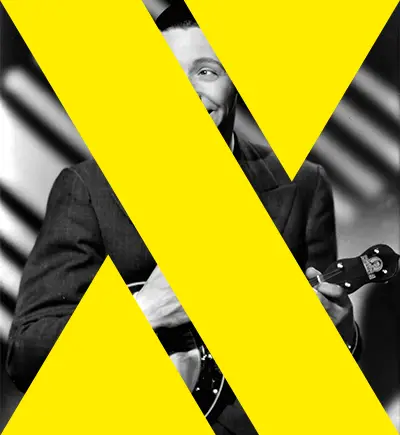
George Formby had several run-ins with the censors during his career. The BBC banned at least three of his songs, With My Little Ukulele in My Hand (1933), With My Little Stick of Blackpool Rock (1937) and most notably, When I’m Cleaning Windows (1938) with a BBC ‘clean’ version being used on air. Formby was reported to be most indignant when one broadcaster commented, the “windows are not yet clean enough for this programme.”
In 1944, Formby was facing a ban yet again when he was investigated by the Dance Music Policy Committee, accused of singing “enemy-friendly” lyrics. He performed for the committee and the three songs under question were ‘passed’.
Daily Mirror, 28th November 1938
/ Yorkshire Evening Post, 5th August 1999
BBC OFF AIR BECAUSE OF THESE TWO WORDS
A BBC broadcast was abruptly halted when a performer mistakenly said, “Mrs. Simpson” (in place of a different name) live on air. Mrs Simpson’s name had never been spoken on air before, even throughout the abdication crisis. The BBC had to apologise to listeners “for an unfortunate lapse from taste”.
Daily Express, 10th February 1937
THE EIGHT-LETTER-WORD TOO RUDE TO BROADCAST
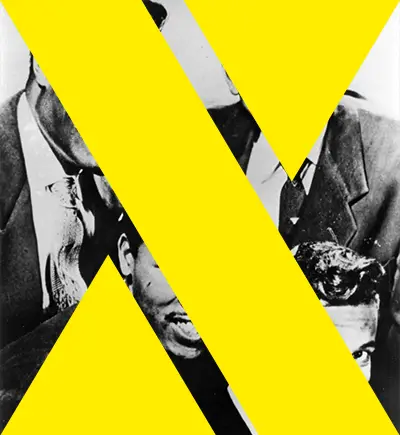
In 1959, The Coasters had a big hit with Charlie Brown, before two weeks in finding themselves banned by the BBC because the lyrics contained the word, ‘spitball’. The ban was lifted a short time later following a special appeal to the Dance Music Policy Committee.
Bristol Evening Post, 11th April 1959
REASON WHY BAH HUMBUG BEEB IS OUT OF TOUCH
Ever cautious, the BBC made the decision to exclude dance music, comedians and music-hall acts on Christmas Day broadcasts in 1938. Listeners reacted negatively to the lack of jollity, with a criticism that’s so often bandied about today – that “the BBC seems to be losing touch with the general public.”
Daily Herald, 14th November 1938
WRITER BREAKS SILENCE ON GRUESOME HIT TUNE
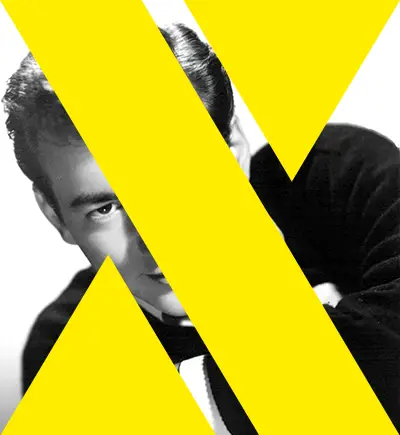
On the back of the release of Bobby Darin’s version of Mack the Knife in 1959, a newspaper columnist remarked it was “a gruesome bit of nonsense about the shady underworld” and they didn’t “see that it [was] necessary to glamorise thuggery by perpetuating it on disc.” The song, previously recorded by Louis Armstrong in 1955, was already subject to a BBC ban.
Birmingham Weekly Mercury, 7th September 1959
YOU WON’T BELIEVE WHAT’S GOT BBC SCREWY
The Jimmie Lunceford song, I’m Nuts About Screwy Music, was banned by the BBC in 1936. Presumably, the ban was for reference to, or making light of, mental conditions as the song later made it to the airwaves with the first verse (‘At the state asylum’…) removed, skipping straight to the more general ‘nuts about screwy music’.
It prompted composer and conductor Sir Henry Coward to say, “It is high time there was a great outcry and a boycott against the vulgarism of American popular music which assails our ears at every turn. Through both the wireless and the cinema we hear appalling tunes with disgustingly vulgar lyrics. It is degrading and horrible.”
Daily Mirror, 5th June 1936
1930s shockers
These last three songs are nowhere near the most shocking songs around during the 1930s, we picked them as examples that were from mainstream artists who were popular in the UK. If you want to hear something extreme then look up Lucille Bogan’s Shave ‘Em Dry II or Till the Cows Come Home on YouTube/Spotify.
THE FLAT FOOT FLOOGIE
No. 2 hit for Slim & Slam and no. 7 hit for Benny Goodman, both in 1938.
The flat feet floogie with the floy floy
The flat feet floogie with the floy floy
The flat feet floogie with the floy floy
Floy doy, floy doy, floy doy, floy doy
floogie = prostitute
floy floy = syphilis
flat feet = symptom of syphilis
MINNIE THE MOOCHER
No. 1 hit for Cab Calloway & his Cotton Club Orchestra in 1931
Folks, here’s a story ‘bout Minnie the Moocher
She was a red hot hoochie-coocher […]
She messed around with a bloke named Smokey
She loved him though he was cokey
He took her down to Chinatown
And he showed her how to kick the gong around
hoochie-coocher = belly dancer
cokey = cocaine addict
kick the gong = smoke opium
PUSSY!
Harry Roy & his Bat Club Boys’ signature song in 1931
There’s one pet I like to pet
And every evening we get set
I stroke it every chance I get
It’s my girl’s pussy
Seldom plays and never purrs
And I love the thoughts it stirs
But I don’t mind because it’s hers
My girl’s pussy
Often it goes out at night
Returns at break of dawn
No matter what the weather’s like
It’s always nice and warm
It’s never dirty, always clean
In giving thrills, never mean
But it’s the best I’ve ever seen
It’s my girl’s pussy
pussy = cat. obviously.