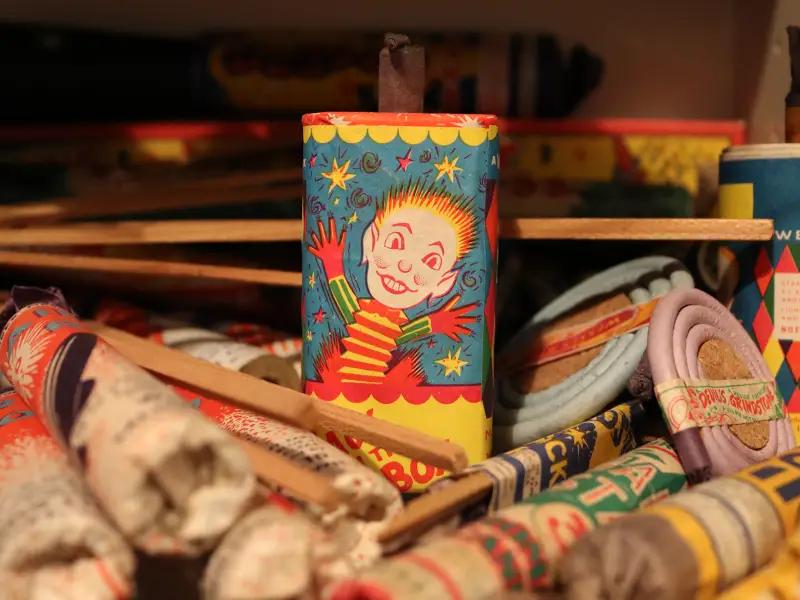
If you’re a regular reader of this magazine, you’ll have almost certainly seen Tony’s ‘vintage firework collector’ advert, and perhaps said to yourself, nobody could be collecting fireworks, surely?! And more to the point, there’s no way vintage fireworks could still exist – you buy a firework, you blow it up! Well, as the presence of the advert should suggest, you’d be wrong on both counts, and if you’re ever as lucky as I recently was, to see this collection for yourself, you’ll be more wide-eyed with ‘oohs’ and ‘aahs’ at this firework display, than you would at any you’d see in the night sky.
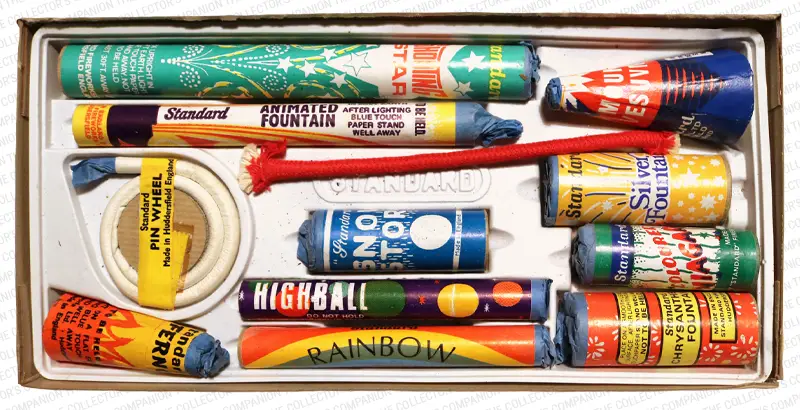
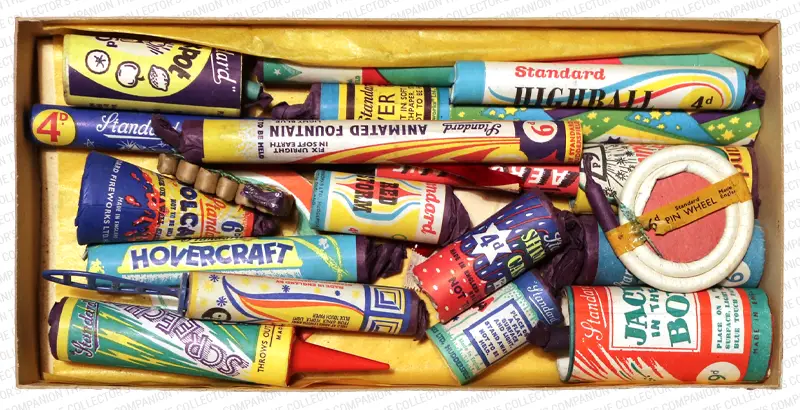
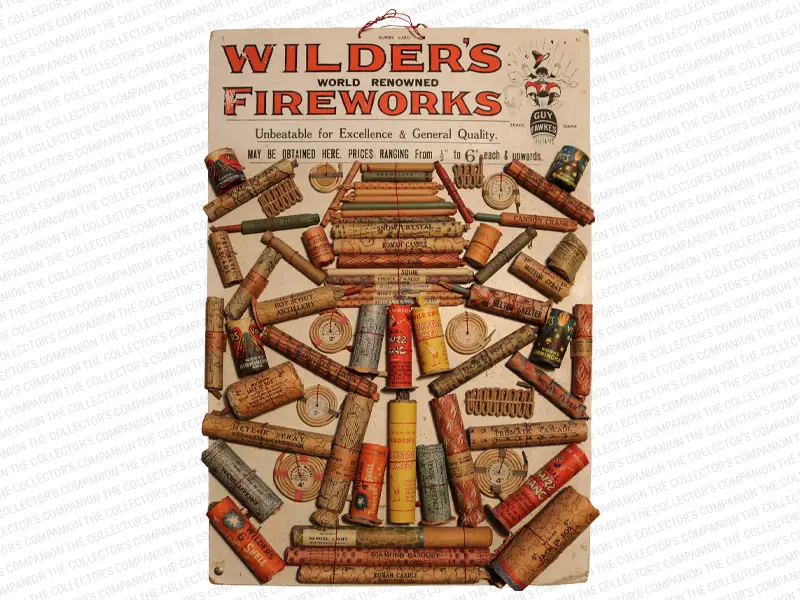
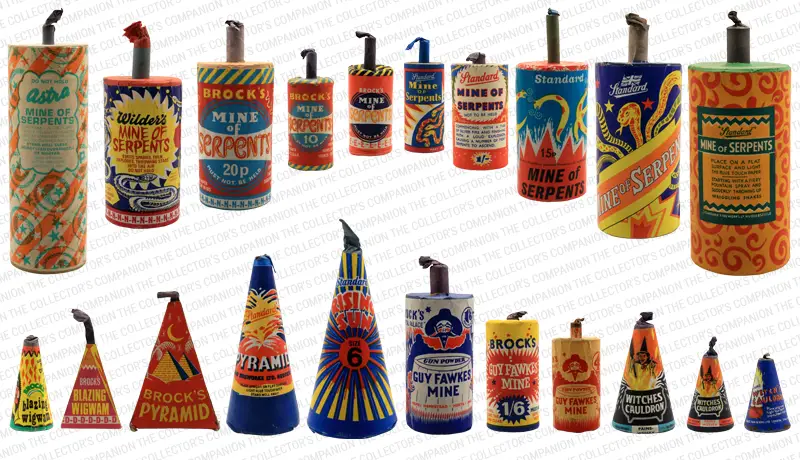
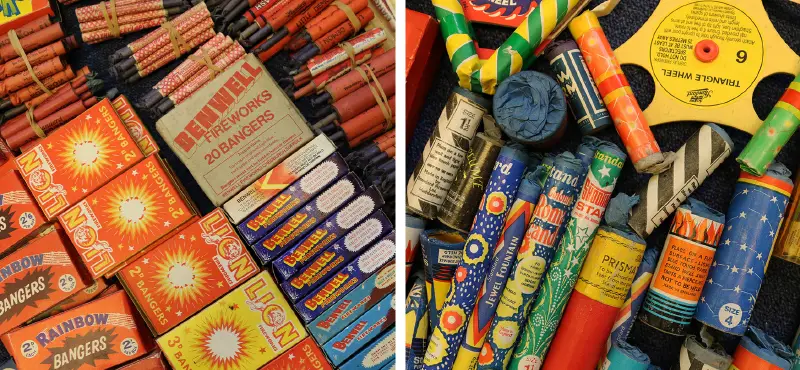
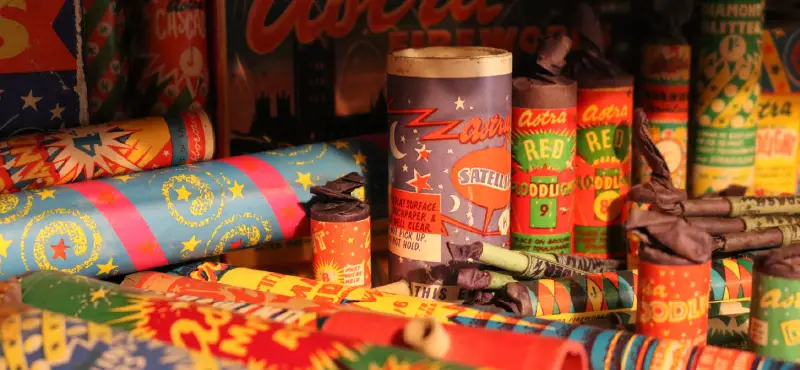
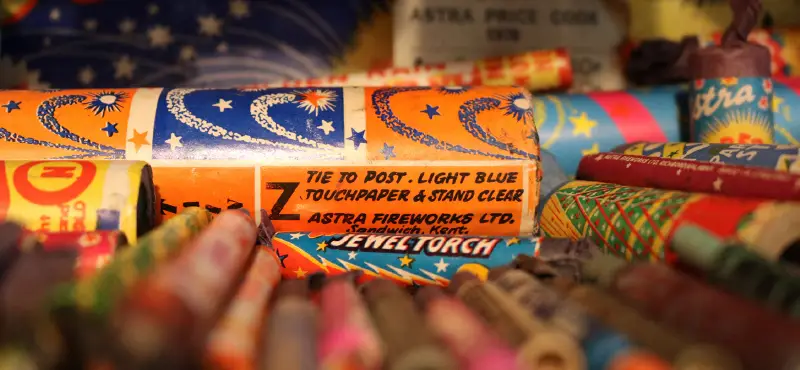
Before I visited Tony, he sent me a photo of a modest display cabinet with around a hundred palm-sized fireworks all neatly lined up in rows and another of a vintage shop cabinet with some big rockets in. Planning my photography session and hoping to photograph it all, I asked, is that the majority of the collection? That naïve question was met with a laugh. No, that was a tiny portion of his collection. I couldn’t possibly photograph it all. He was, of course, correct and what is shown here are the more easily photographed fountains and mines, alongside photographs showing the collection displayed on shelves and in drawers, which hopefully convey how impressive, in quantity and quality, this unique collection is.
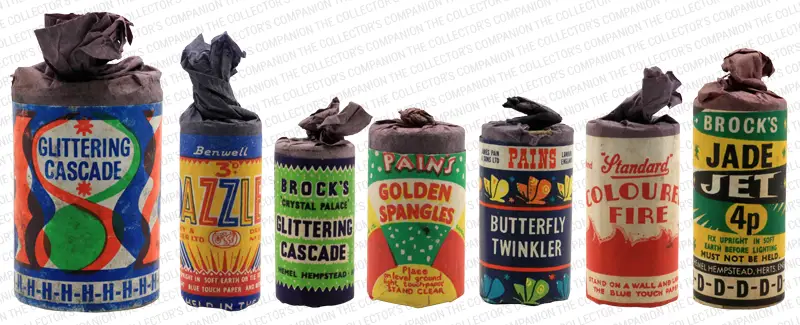
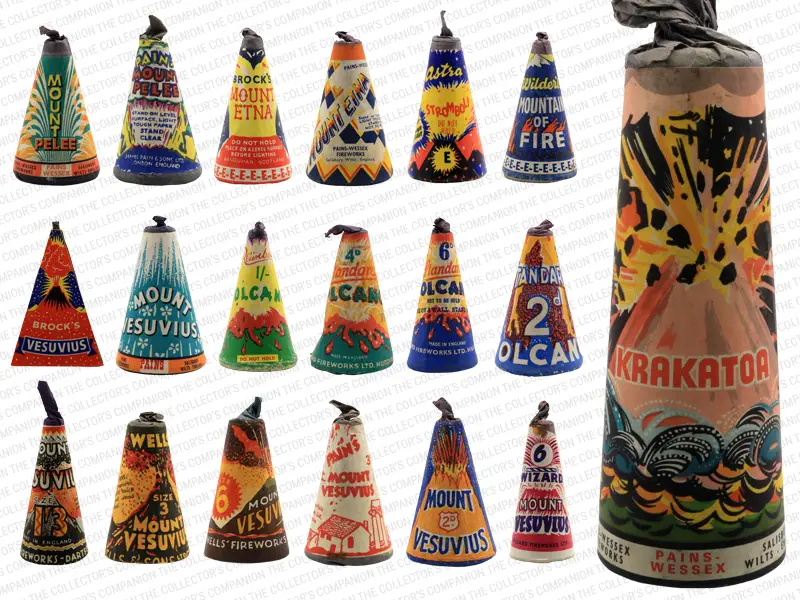
The fireworks pictured are all British and date between the 1930s and 1980s, with most from the 60s and 70s. Many are priced with old (pre 1971) or new pence.
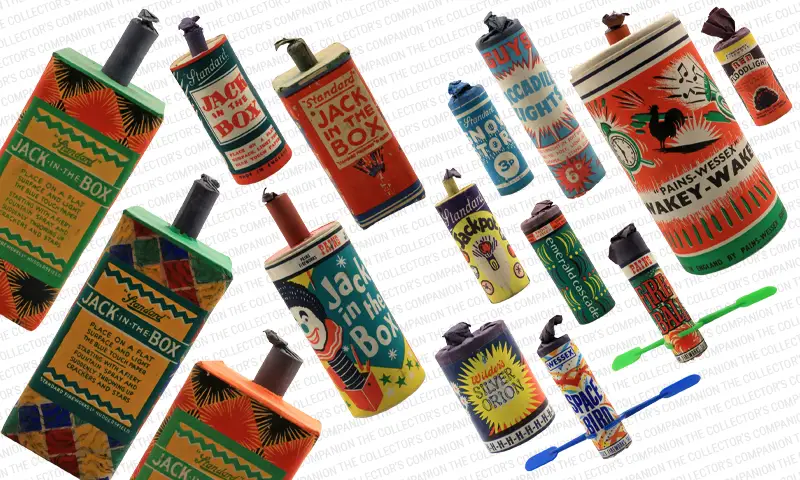
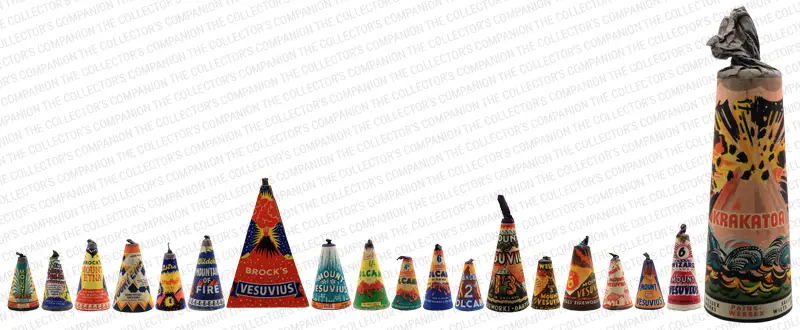
The volcano fireworks below were resized to best fit the magazine page. The line-up above shows their relative sizes.
“I remember shopping with my mother, for two and six pence you could buy a marvellous array.”
Collecting fireworks may be unusual, but Tony’s motivations are not. For him, Bonfire Night was the most exciting day of the year, but all he had as an adult were the childhood memories and none of the fireworks. Of course, all of Tony’s childhood acquisitions had, quite literally, gone up in smoke; it wasn’t until he was in his 40s that he started his collection in earnest, with the belief that these ephemeral objects needed to be preserved and the hope they will eventually be housed in a purpose-built museum.
“It all disappears, all goes up in smoke and gets burnt, and so the survival rate is minimal. I decided that I needed to start putting some of this to one side.”
Collecting any type of ephemera retrospectively can be difficult, so imagine searching for something that was made with the sole purpose of being destroyed. Fortunately, fireworks weren’t sold to retailers on a sale-or-return basis and this supply method meant that older fireworks with point-of-sale material and original packaging could still be found, not just smaller selections languishing in garden sheds and garages.
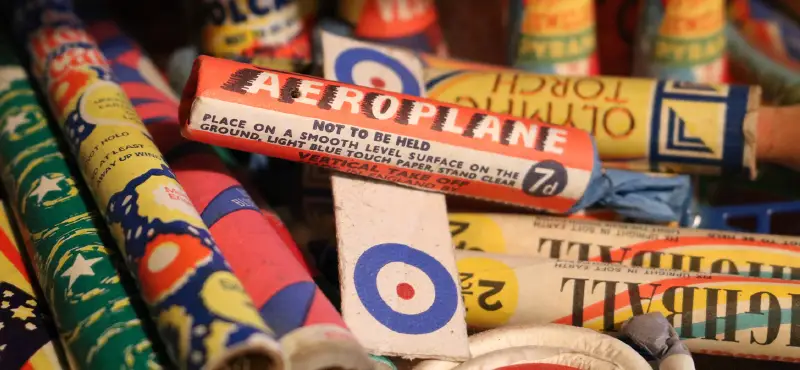
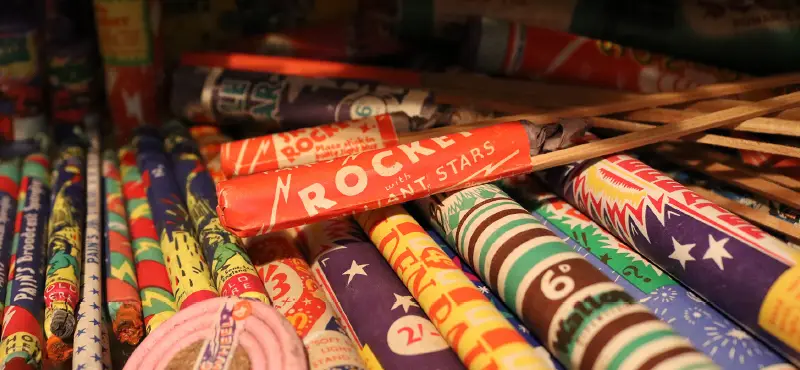
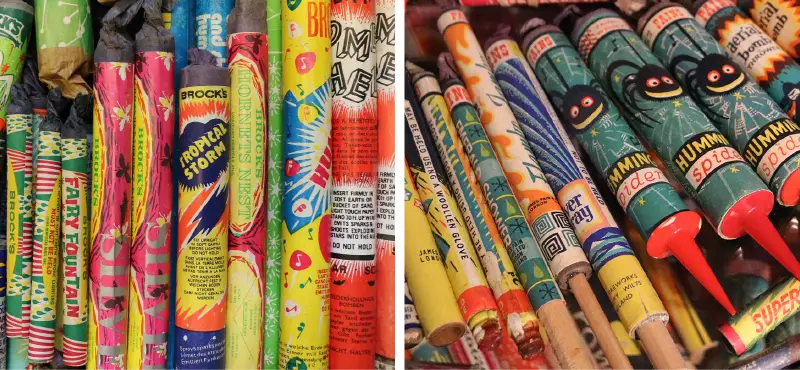
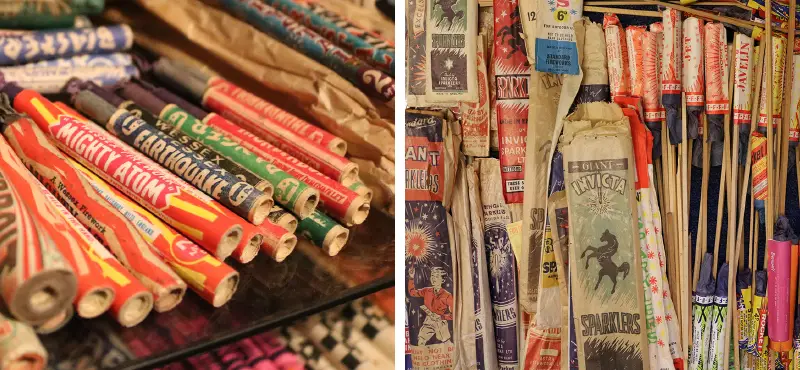
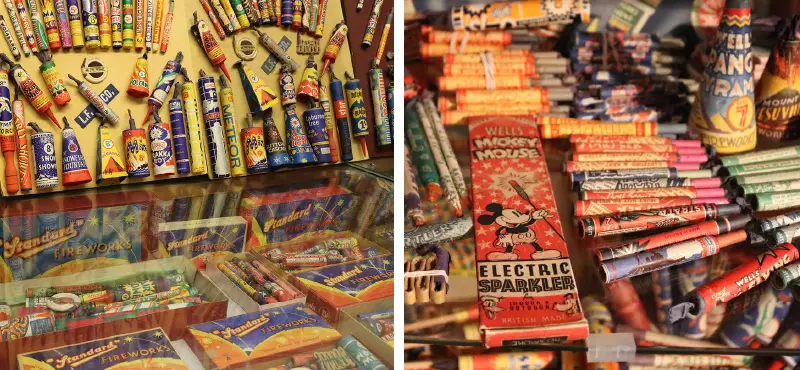
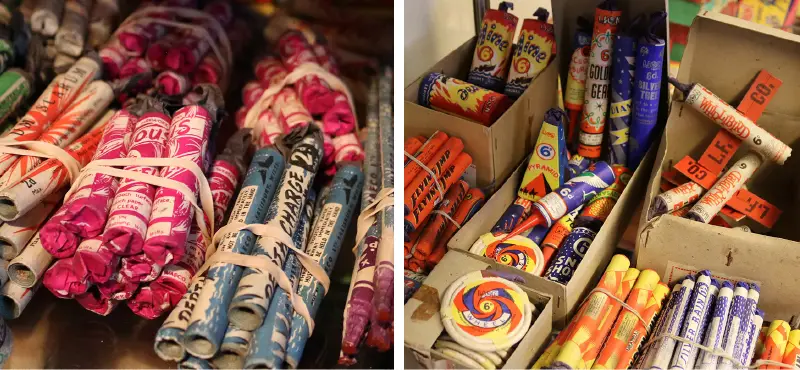
“We had linear gardens and each family had bonfires at the bottom. We’d watch each others’ fireworks and it was a tremendous social event, it was just brilliant.”
Guy Fawkes’/Bonfire Night will hold fond memories for millions of British people, particularly those with working class upbringings. It evokes collective nostalgia for a time when people knew their neighbours, kids played outside until dark and health and safety… what health and safety?
Vintage British fireworks are not only significant for their place in packaging design history with their advertising and names reflective of life in those eras, but significant for their place in British manufacturing history, with Brock’s, Pain’s, Wells’ and Standard all established in the Victorian era.
Like so many factories, production was halted during both world wars, with their facilities and skills making them very obviously suited to producing munitions. After WWII, fireworks surged in popularity, with the number of manufacturers more than doubling.
The 1980s brought the start of Chinese imports and rockets housed in plastic instead of card. One by one the British manufacturers closed their doors, and while you may see displays of Standard ‘since 1891’ fireworks in your local Lidl, they have been owned by Hong Kong-based Li & Fung since 1998.