
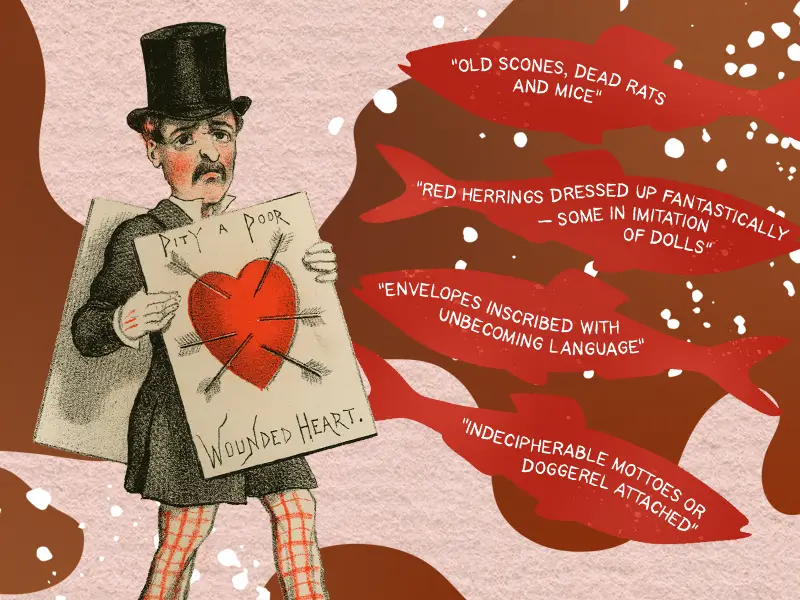
This time last year, we featured a selection of dainty, sentimental Victorian valentines. Valentines were a huge business, fuelled by new colour printing processes and the Penny stamp (1840), reaching an estimated peak of 1,500,000 cards sent annually by the 1870s.
This year, we share no cupids or cute hand-holding children, for there was another side to Valentines that takes us beyond the respectable veneer of Victorian society, into the bawdier, more Dickensian reality.
Comic, mock or vinegar valentines were the antithesis of the usual sentiment, insulting their recipients with nasty cartoons, verses or even revolting gifts. Year after year, over the last half of the 19th century, newspapers ran articles decrying a rise in popularity of the “vulgar” mock valentine and sung the praises of the poor, overworked Post Office officials, sorting through the dead and doggerel, dutifully consigning them to the furnace.
ST VALENTINE’S DAY. – The duties of our town postman were more than usually onerous on Wednesday last. The sending of mock valentines has this year been indulged in to a greater extent than for several years back. The practical jokers who indulge in this frolic – parties who have apparently more pence than sense – do not now confine themselves to those odious caricatures of humanity to be seen in the booksellers’ window, but patronise the grocers for herring, the toy-merchant for jumping-jacks, wherewith to compliment those whom they wish to annoy. Dead mice and other loathsome animals were also in such abundance that Allan, the letter-carrier, was unable to take them all at once, and at one time had a serious thought of engaging Colin, our “First-Class Railway Porter,” and his barrow to assist him in the emergency.
Blairgowrie Advertiser, 17th February 1866
The people in the “lower localities” were seen to be the main offenders of this distasteful shift in tone, which while likely to be true, wasn’t entirely fair as they were merely following an older, though less personal, tradition that started in high society.
More than a century earlier, prior to cheap printing and more widespread literacy, insulting cartoons were more often for the purchase and enjoyment of the wealthy. Following the more traditionally painted political satires of Hogarth in the first half of the 1700s, cartoons shifted towards the exaggerated and grotesque style of satirical portraiture still used today, heavily influenced by Italian art, with caricature coming from the Italian verb caricare, “to load” or “to charge”. It assisted in removing an intellectual barrier from satire, the ‘victim’ could be laughed at without the need to understand any subtext or allegories.
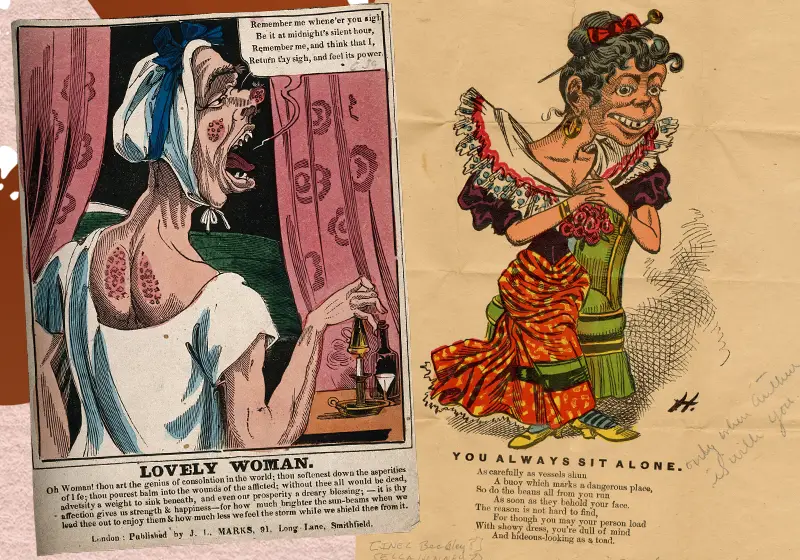
Right (valentine): ‘You always sit alone.’ Note reads, ‘only when Anthea(?) is with you’. Sent to Inez Beckley from Ella Henny. Source: Edith L. Moore collection, Genealogy Division, Indiana State Library.
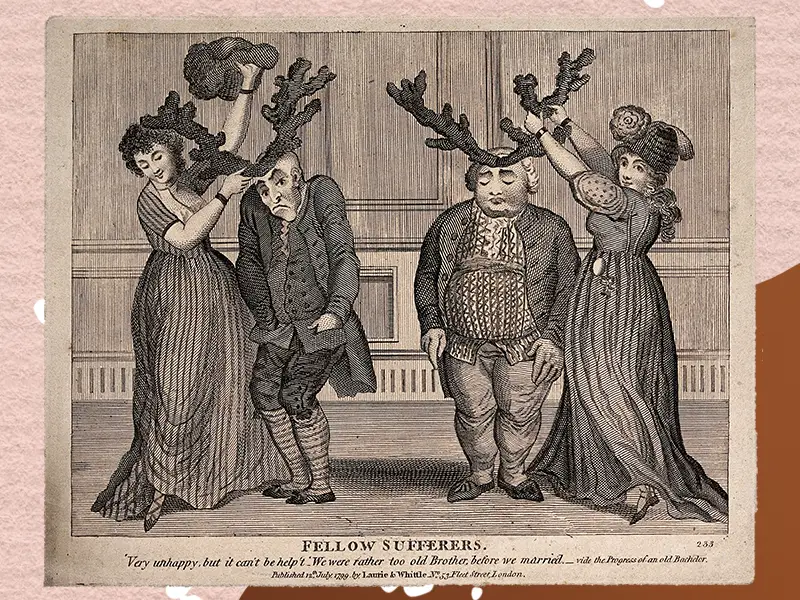
Cartoons were published in pamphlets and sold in bookshops and inns, or as one sheets, displayed in shop windows with customers gathering outside to see the latest offerings. During this period there were a number of prolific women publishers, who successfully pushed the medium beyond purely political subjects, to ridiculing celebrities (and to some extent, creating celebrities), fashion and societal behaviour.
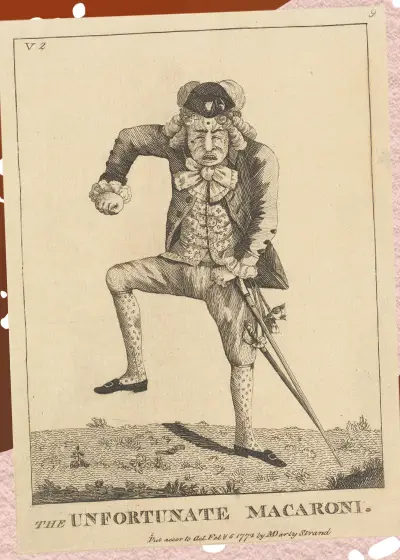
Mary Darly (1736-91) was an artist, etcher and publisher, who in partnership with her husband Matthias, ran a successful printshop on Fleet Street. Early work was highly political, regularly attacking the prime minister Lord Bute. Mary then took aim at Hogarth for his support of Bute, with one cartoon, The Boot & the Block-head (1762), depicting Bute’s boot hanging from a ‘tail of beauty’ (an art aesthetic originated by Hogarth), thus also ridiculing his old-fashioned style of cartoon. A few years prior to this, Mary published the first English how-to book of drawing caricatures, formalising this new style of satire. Having ‘given’ caricatures to the ordinary man and woman, Mary and Matthias went on to publish highly successful volumes of Macaronies – depictions of London dandies, in their flamboyant European fashions.
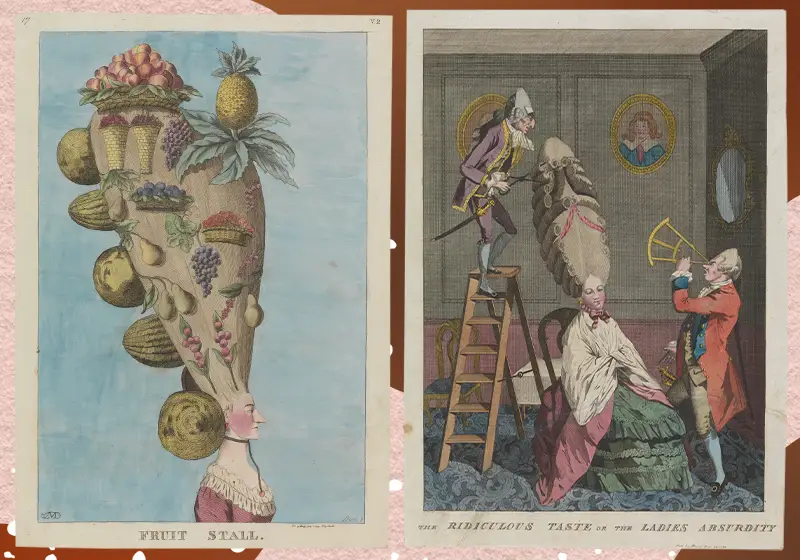
Right (print): 1768. ‘The ridiculous taste or the ladies absurdity.’ Mary Darly. Source: Chester Beatty.
Hannah Humphrey (1750-1818) was one of the most prominent and successful print sellers in London, starting out from her brother’s shop before establishing her own premises selling only her own prints. Hannah published cartoons on a range of political and societal topics, hiring James Gillray to work for her exclusively. Hannah’s publishing often targeted women celebrities with a series of cruel depictions and nicknames.
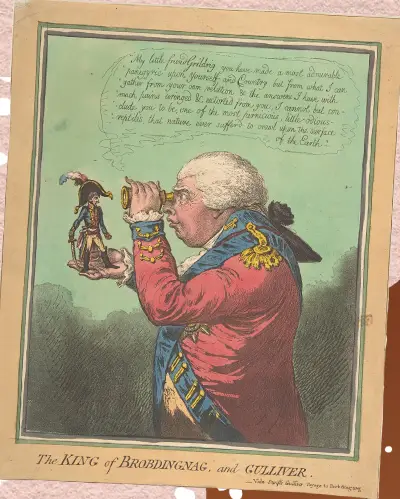
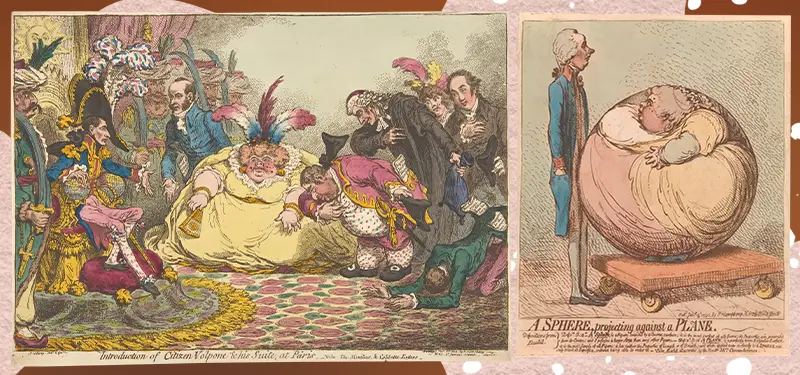
Right (print): 1792 ‘A sphere, projecting against a plane.’ Depicting Albinia Hobart, Countess of Buckinghamshire. Both: James Gillray/Hannah Humphrey. Source: The Met.
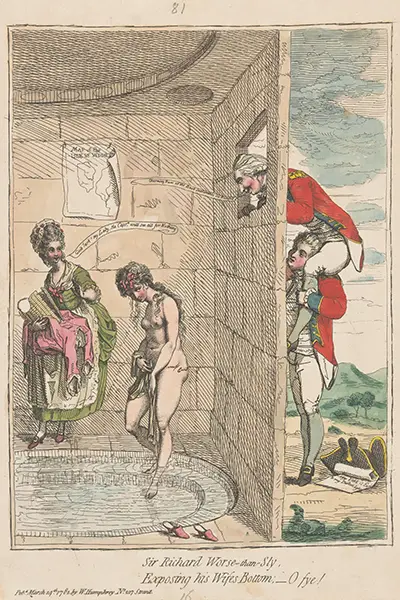
Sir Richard Worse-than-Sly,
Exposing his Wifes Bottom; –O fye!
This 1782 cartoon by Gillray, published by Hannah’s brother William, ridiculed Sir Richard Worsley, who had recently sued Captain Bisset (pictured on his shoulders) for adultery with his wife. Lady Seymour Worsley had run off with Bisset the year before and used the court case to destroy her husband’s reputation with a series of witnesses testifying that Richard had been complicit in her taking 27 lovers. A trial highlight was a servant’s testimony that, on one occasion at Maidstone Baths, Richard had lifted Bisset onto his shoulders so he could watch Lady Worsley bathing naked. Richard was awarded one shilling in damages (not the £20,000 he’d sought) and with his political career in tatters, he fled to Europe for five years.
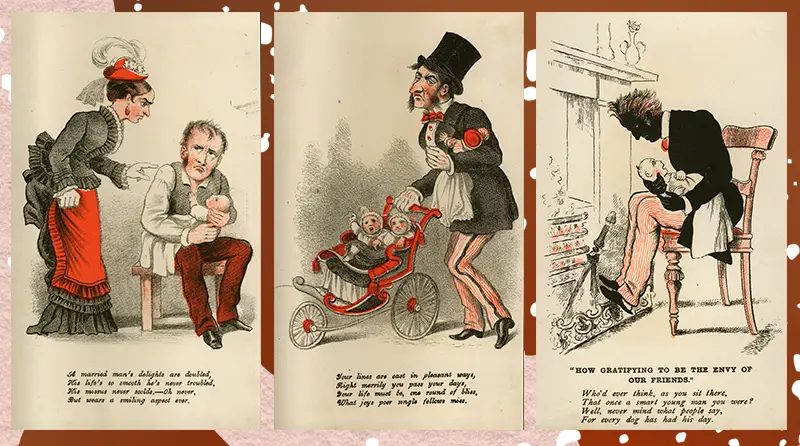
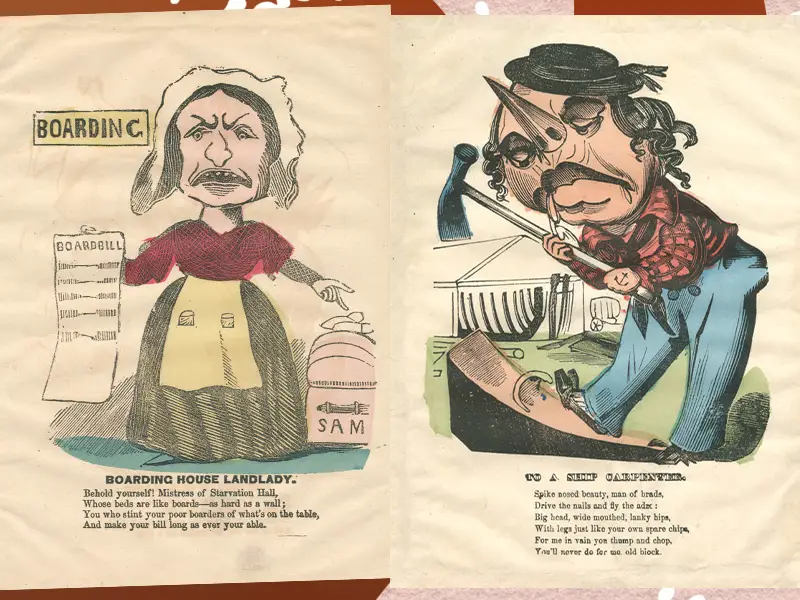
By the time valentines had started to shift from kind to cruel, the scene had already been set; what the mock valentine did was make a target out of anyone and everyone. Have a dislike for your local baker? There was a card for him. The butcher? Ditto. There were cartoons and verses aimed at every trade you could think of. There were swathes of cards aimed at gossipy women and spinsters, and perhaps in response to the growing suffrage movement, cards mocking downtrodden or cuckolded husbands. That’s not to suggest this trend was one driven by men to denigrate women, on the contrary, it was said to be women who most indulged in the practice of insulting their friends or neighbours. There is also evidence of the cards being used for moralising or warnings, with the message on the reverse of one card (‘you are on the road to destruction’ – below) reading, “you are ok. I don’t think you are almost as two faced as the women you stay with.’
Last year, we encouraged you to chop up the pages of this magazine to make your own valentines card. This year we give no such encouragement.
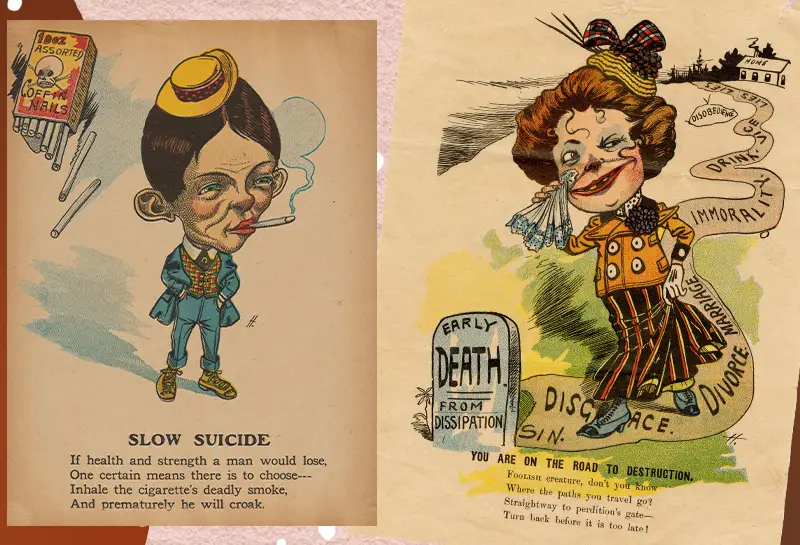
Right (valentine): Ca 1900. ‘You are on the road to destruction.’ Source: Edith L. Moore collection, Genealogy Division, Indiana State Library.

THE DECAY OF VALENTINES.
St. Valentine’s Day is disappearing. It is really only an excuse in the West-end for a slight distribution of presents from the more sentimental; while matter-of-fact people do not notice it at all. As a mode of conveying a declaration of affection it is despised by the cynical youth of an unbelieving generation. But in the East-end the Saint retains a little of his old influence. The windows of many fancy shops are filled to overflowing with valentines. But there are more of the comic than the sentimental. What are called “comic” are called so by courtesy. For sheer brutal vulgarity there is nothing to equal a comic valentine. A Budget representative dived into Houndsditch the other day in search of valentines novelties. It is from Houndsditch that these things mostly come. One representative writes:–
I found the principal of the firm of Marks and Co. busy selling valentines by the gross. “We have” he said, “been catering for the young affections of the English people for the past eighty years, but the trade is now going down. The sales this year are much below those of last. Once we were designing and making valentines all the year round. We also did a large export trade in valentines. That has disappeared entirely. However, we still send to all the provincial towns.”
“What do you sell most of – the comic or the sentimental?” – “Oh, the comic, by all means. Young gentlemen buy the sentimental. Women are the principal purchasers of the comic.”
…
I asked Mr. Marks whether he had any new designs in “comics”? “Only one or two,” he said. “We don’t trouble much about designs, but use the same year after year till the ‘litho’ stones wear out. But this is one that is new.” He handed me a “comic” of the usually high-coloured nature. Mr. Chaplin had given the designer a hint. It portrayed an over-dressed young gentleman with a muzzle on. Beneath was this generous sentiment addressed to “A Backbiter:”
A rabid cur that barks and bites
Should be muzzled both days and nights.
“When we bring out a new design like this,” said Mr. Marks, “we always have both ladies and gentlemen represented. But it is ‘trades’ that go best. Policemen, dressmakers, carpenters, and all the employments of the poorer classes – these always sell well, but only in certain districts. In other districts our customers will ask for the professions. Those mock-marriage certificates and telegraph forms always sell well. So do babies: babies always sell well.”
Pall Mall Budget, 20th February 1890