

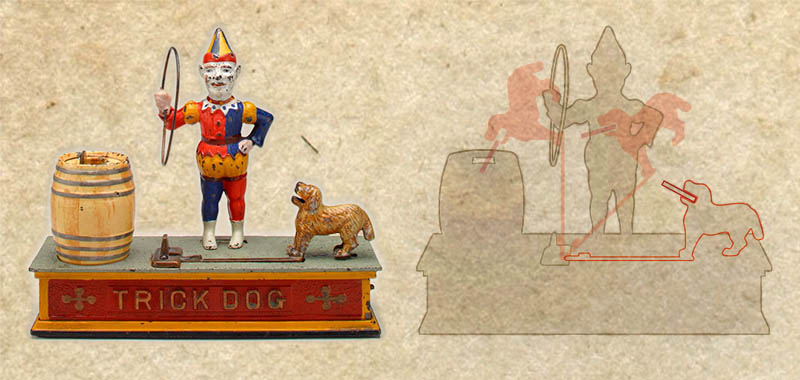
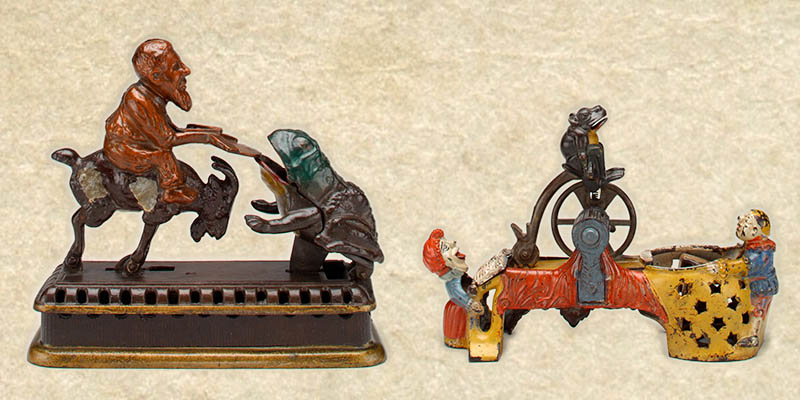
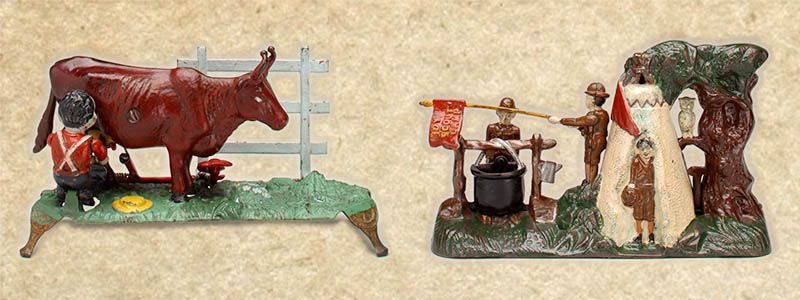
Do you remember the elaborate charity collection tubs that would stand near the checkouts in most supermarkets? What fun it was to watch mum’s change zig-zag or spiral away. So imagine the fun that could be had with the savings banks pictured here, over one hundred years prior.
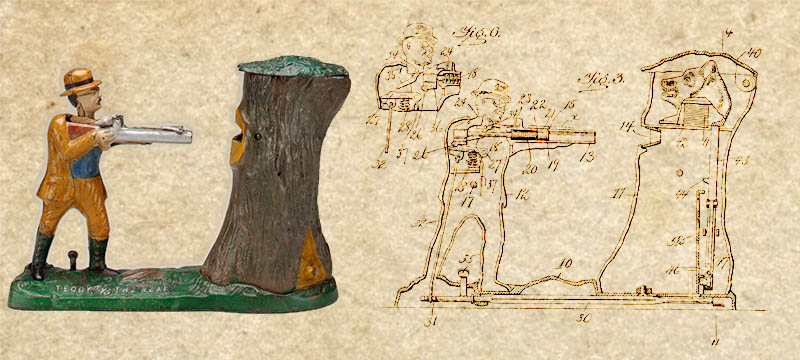
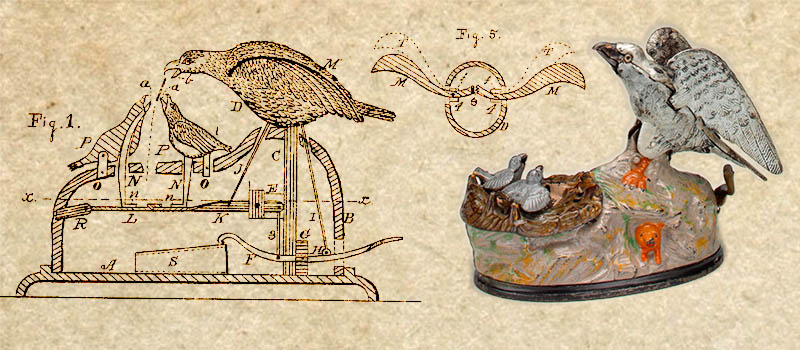
Even way back in 1938, these savings banks were referred to as “old time mechanical toys” that had become “very important collectors’ items.” Over a period of around forty years, hundreds of designs were produced, and thanks to the Patent filings, much is known about their workings.
Since those early days, many replicas have been produced. The lesser, more numerous replicas are not moulded from the original patterns, but from the finished article, resulting in reduced detailing and a more pebbled surface with each copy.
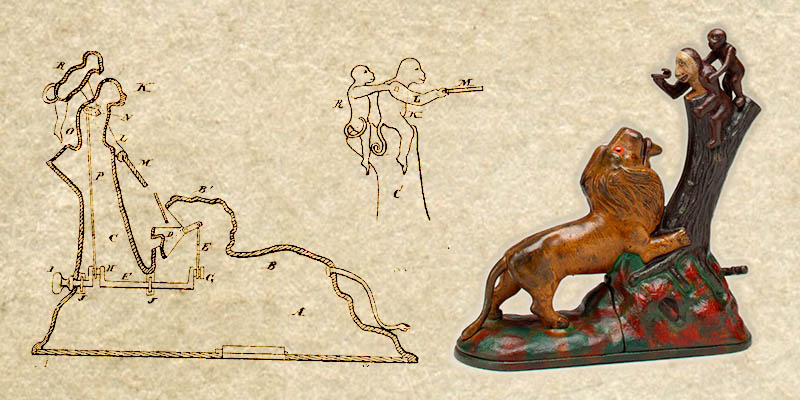
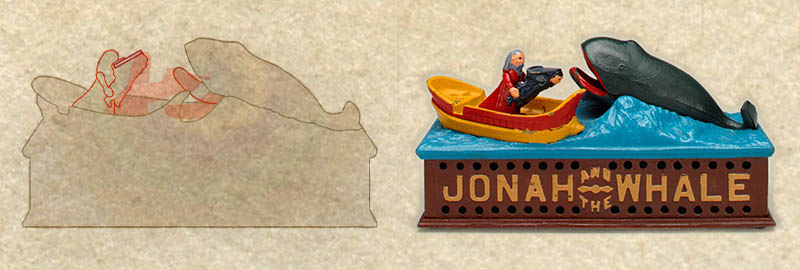
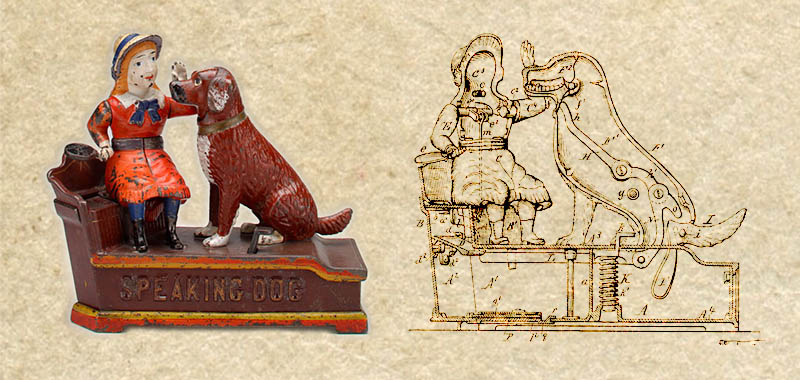
“The operation is as follows: The money having been placed upon the plate or receptacle M, the knob I is rotated. This simultaneously opens the lion’s mouth, lowers the arms L, raises the figure R, and causes the money to fall into the open mouth of the lion, which immediately closes, and all the parts return to their original positions.”
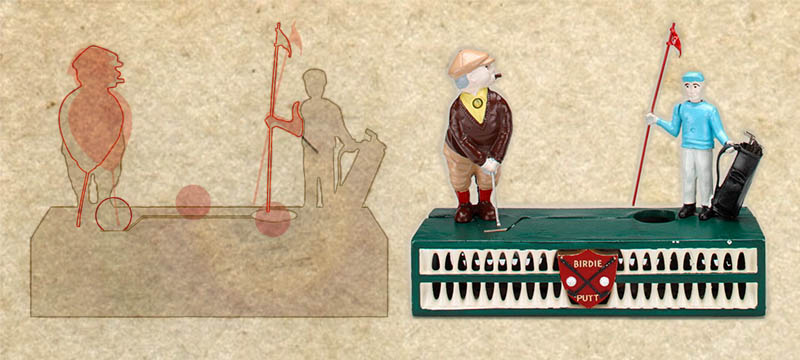
“The first truly new idea in over fifty years in this marvelous collectors’ hobby. The Birdie Putt can’t help but please young and old alike.”
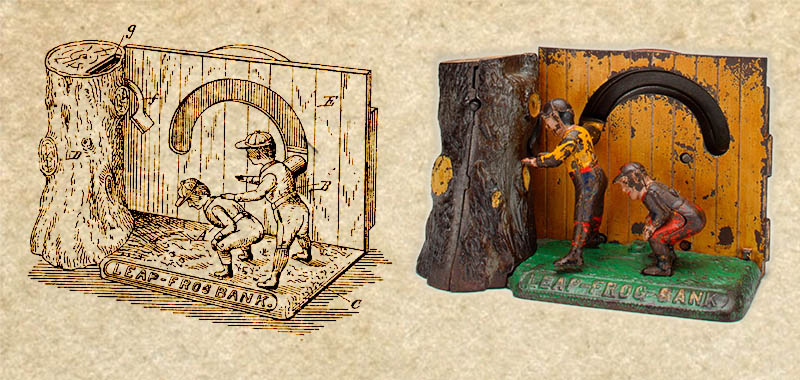
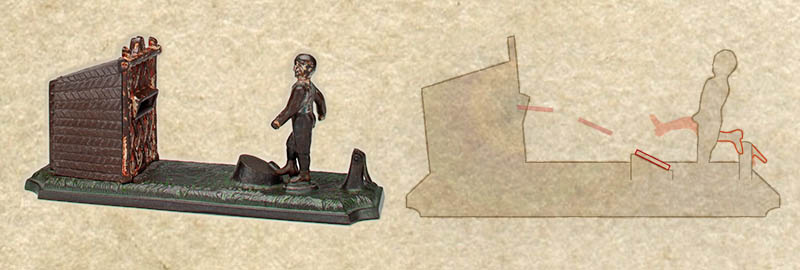
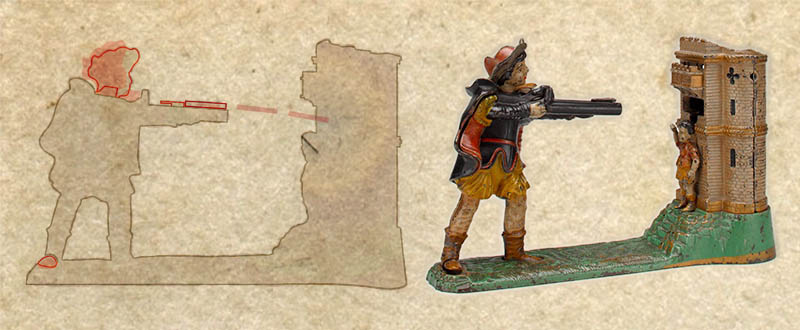
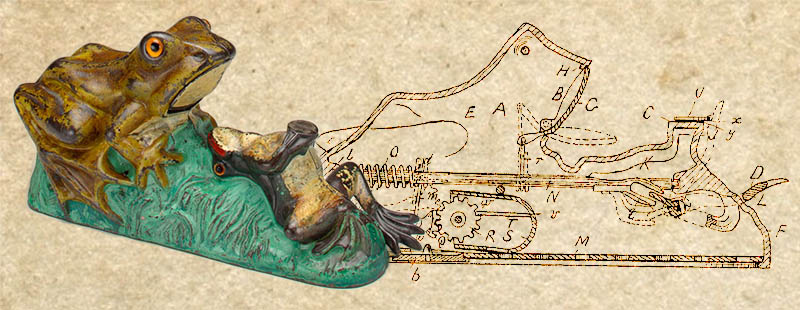
“…by the swing of said projecting device D or leg L in one direction it will properly strike a coin, U, placed upon the stand, to project it therefrom into and through the open aperture or mouth of the sitting frog or money-receptacle A, and thus into said receptacle.”
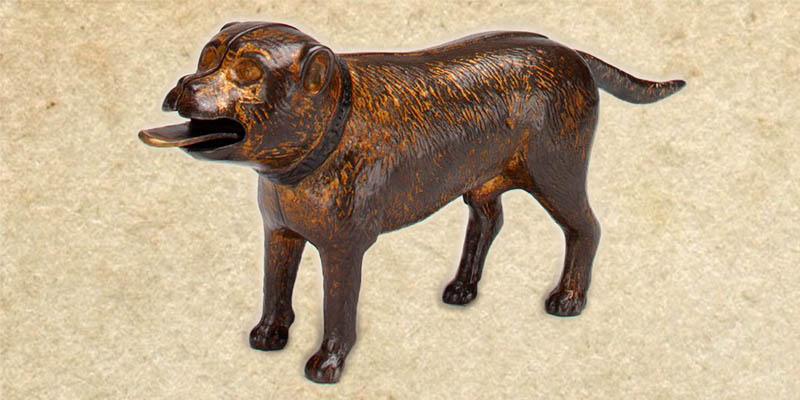
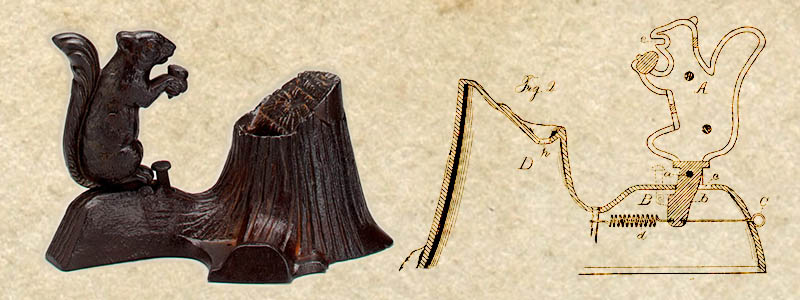
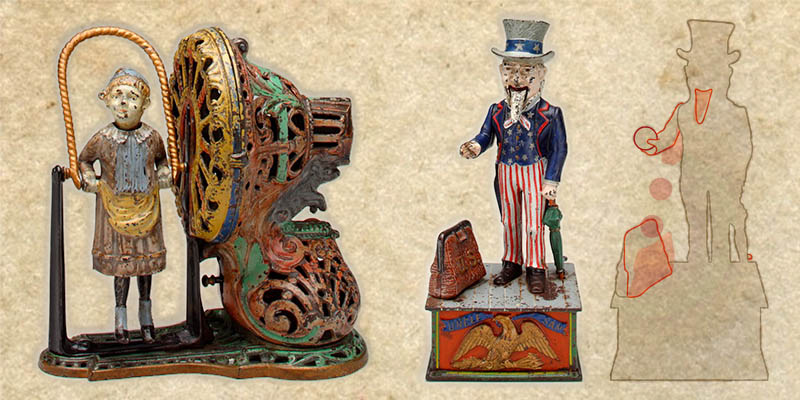
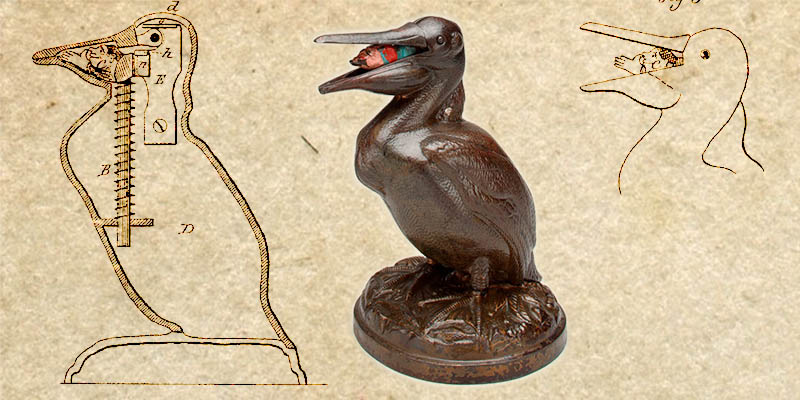
“…the trunk automatically closes the slot as soon as the coin is deposited. Coin can be removed only by taking the bank apart.”
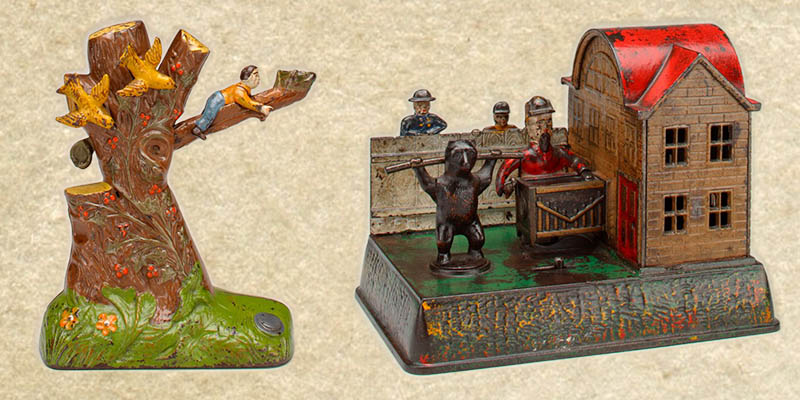
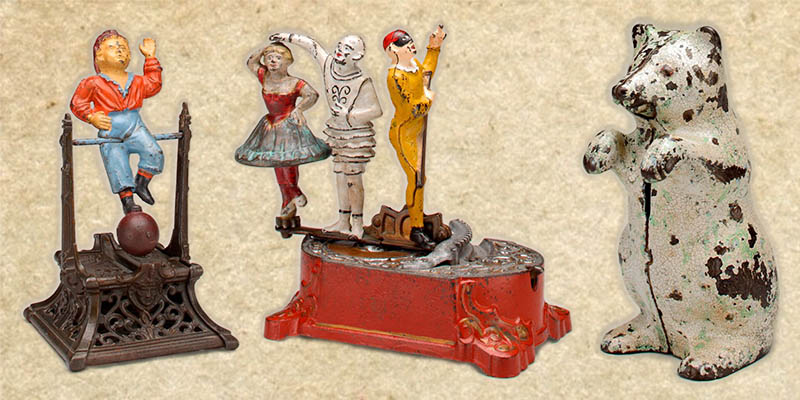
“For one penny dropped in the head the boy revolves once.
For a nickel twice.
For a quarter dollar three times.
For a half dollar four times.”
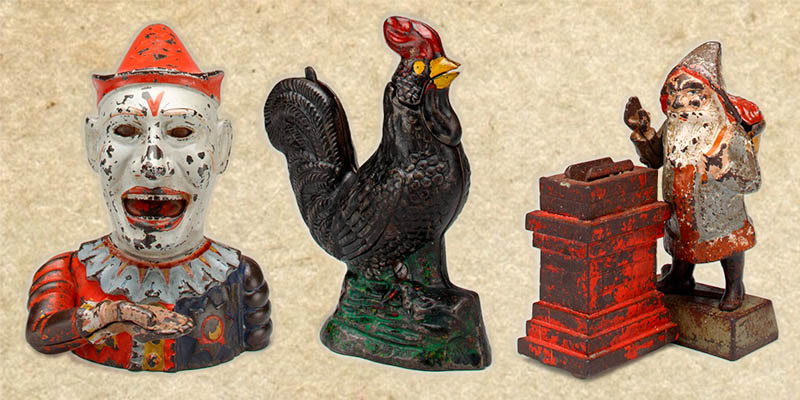
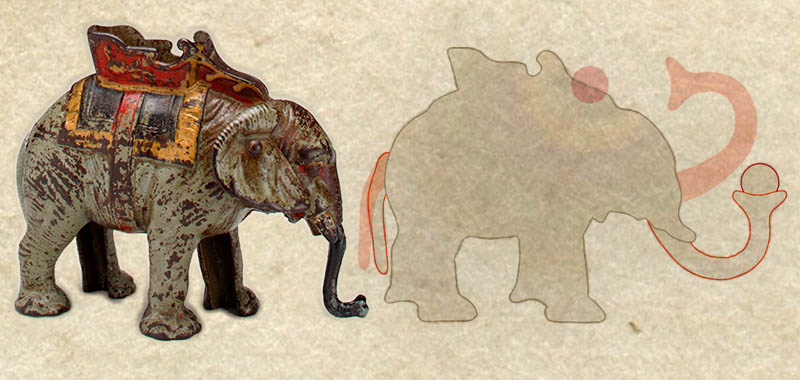
“Put a coin in his hand and see how promptly he pockets it, and how politely he bows his thanks.”
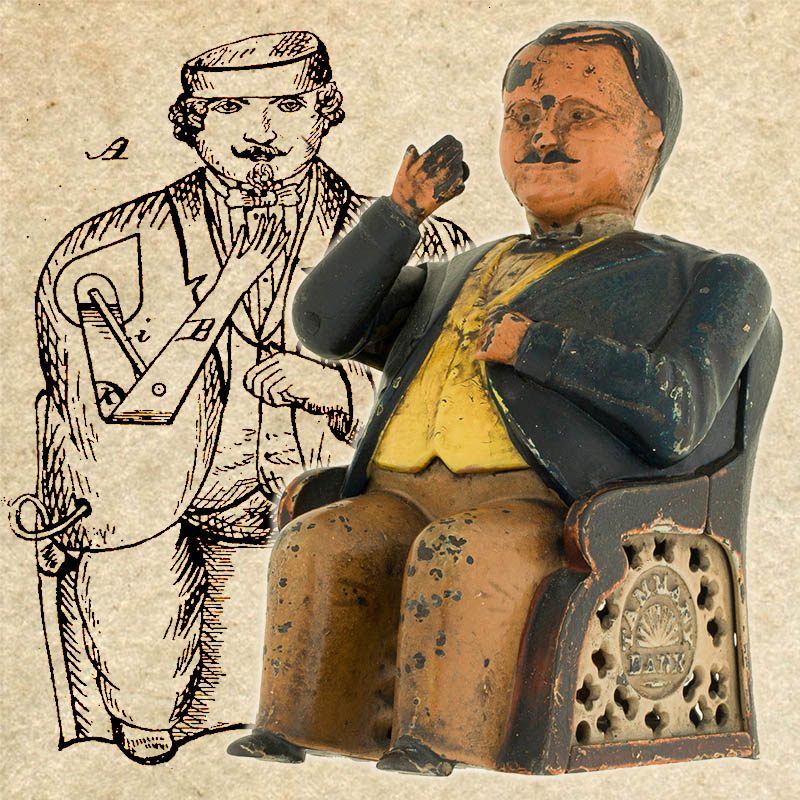
The “Little Fat Man Bank” was patented in 1873. It was reissued and renamed “The Tammany Bank” in 1877, in reference to the corrupt NY political party, Tammany Hall, perhaps suggesting the passing of a bribe to Tammany’s boss, William “Boss” Tweed.
All of the banks pictured here are from the 950-piece collection gifted by Katherine Kierland Herberger to Minneapolis Institute of Art. All images are courtesy MIA, except for The Tammany Bank, where alternate images have been used courtesy Smithsonian.
Designers and dates are from US Patent filings (via Mechanical Bank Collectors of America), with exception of those marked (*) which indicates information based on vintage advertisements and other sources.
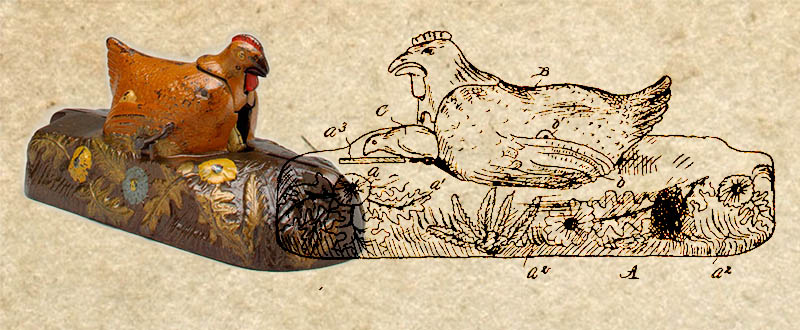
Numbered/lettered diagrams are sourced from US Patent filings. Coloured ‘action’ drawings are by The CC Magazine.